
Introduction
Kaikeyi Boons marks the dramatic turning point of Ayodhya Kand Ramayana, where destiny shifts through a single decision. This chapter narrates how Queen Kaikeyi invokes two long-promised boons from King Dasharath—demanding Bharat’s coronation and Ram’s fourteen-year exile. The episode reveals the power of words, vows, and human influence in shaping fate. It is not merely a tale of palace intrigue, but a profound exploration of dharma under emotional pressure. Kaikeyi Boons exposes the fragile intersection of love, duty, and royal promise, setting the stage for Ram’s greatest sacrifice and the moral trial of an entire kingdom.
परिचय
कैकेयी के वरदान अयोध्या काण्ड का सबसे निर्णायक और करुणामय प्रसंग है, जहाँ एक ही क्षण में आनंद शोक में परिवर्तित हो जाता है। महारानी कैकेयी द्वारा माँगे गए दो वरदान—भरत का राज्याभिषेक और श्रीराम का चौदह वर्षों का वनवास—कथा की दिशा को पूरी तरह बदल देते हैं। यह अध्याय केवल राजमहल की राजनीति नहीं, बल्कि वचन, धर्म और मानवीय दुर्बलताओं की गहन परीक्षा है। यहीं से श्रीराम के त्याग और मर्यादा की वास्तविक यात्रा आरंभ होती है।
मंथरा का आगमन और कैकेयी का परिवर्तन
राज्याभिषेक की तैयारी के बीच मंथरा कैकेयी के कक्ष में प्रवेश करती है। वह कैकेयी को यह स्मरण कराती है कि राम के युवराज बनने से भरत का भविष्य संकट में पड़ जाएगा। मंथरा के शब्द धीरे-धीरे कैकेयी के मन में शंका और भय का बीज बो देते हैं।
Amid the coronation preparations, Manthara enters Kaikeyi’s chamber. She warns Kaikeyi that Ram’s anointment would endanger Bharat’s future. Slowly, her words sow seeds of doubt and fear in Kaikeyi’s mind.
कैकेयी का अंतर्द्वंद्व
कैकेयी के भीतर एक गहरा द्वंद्व उत्पन्न होता है। एक ओर राम के प्रति स्नेह, दूसरी ओर पुत्र भरत के भविष्य की चिंता। यह द्वंद्व धीरे-धीरे विवेक को ढँकने लगता है।
A deep conflict arises within Kaikeyi. On one side lies affection for Ram; on the other, concern for her son Bharat’s future. This inner struggle gradually clouds her judgment.
कोप भवन का निर्णय
मंथरा के उकसावे पर कैकेयी कोप भवन में प्रवेश करती हैं। यह स्थान केवल क्रोध का नहीं, बल्कि मन के अंधकार का प्रतीक बन जाता है। यहीं से कथा एक निर्णायक मोड़ लेती है।
Provoked by Manthara, Kaikeyi enters the Kopa Bhavan. This place becomes a symbol not just of anger, but of inner darkness. From here, the story takes a decisive turn.
दशरथ का आगमन और व्याकुलता
जब दशरथ को कैकेयी के कोप भवन में होने का समाचार मिलता है, वे व्याकुल होकर वहाँ पहुँचते हैं। उन्हें आभास नहीं होता कि यह क्षण उनके जीवन की सबसे बड़ी परीक्षा बन जाएगा।
When Dasharath learns that Kaikeyi is in the Kopa Bhavan, he rushes there in distress, unaware that this moment will become the greatest trial of his life.
वरदानों का स्मरण
कैकेयी दशरथ को स्मरण कराती हैं कि उन्होंने कभी युद्ध में उनकी रक्षा के बदले दो वरदान देने का वचन दिया था। दशरथ का मन आशंकित हो उठता है।
Kaikeyi reminds Dasharath of the two boons he had promised her long ago in return for saving his life in battle. A sense of dread grips Dasharath.
पहला वरदान: भरत का राज्याभिषेक
कैकेयी पहला वरदान माँगती हैं—भरत को युवराज घोषित किया जाए। यह माँग दशरथ के हृदय को आहत कर देती है, पर वे स्वयं को संभालते हैं।
Kaikeyi demands her first boon—that Bharat be crowned as prince. The demand strikes Dasharath’s heart, yet he tries to compose himself.
दूसरा वरदान: राम का वनवास
दूसरे वरदान के रूप में कैकेयी राम के चौदह वर्षों के वनवास की माँग करती हैं। यह सुनते ही दशरथ टूट जाते हैं। यह क्षण केवल पिता का नहीं, राजा और मनुष्य—तीनों का पतन है।
As her second boon, Kaikeyi demands Ram’s fourteen-year exile. Dasharath collapses upon hearing this. It is the fall of a father, a king, and a man—all at once.
वचन और धर्म का संघर्ष
दशरथ के सामने धर्म की सबसे कठिन परीक्षा खड़ी हो जाती है। एक ओर पुत्र का प्रेम, दूसरी ओर दिया हुआ वचन। यह संघर्ष ही इस अध्याय की आत्मा है।
Before Dasharath stands dharma’s hardest test—love for his son on one side, a sworn promise on the other. This conflict forms the soul of the chapter.
दशरथ का अंतःसंघर्ष और विवशता
कैकेयी के वचनों को सुनकर महाराज दशरथ जैसे भीतर से टूट गए। उनका शरीर कांपने लगा और वाणी साथ छोड़ने लगी। वे जानते थे कि यह निर्णय केवल राजकीय नहीं, बल्कि उनके जीवन का सबसे कठिन क्षण है। वचन देना क्षत्रिय धर्म है, पर पुत्र से वियोग मानव हृदय की सीमा है। इसी द्वंद्व में दशरथ मौन हो गए—एक ऐसा मौन, जिसमें असहायता, पश्चाताप और भय समाहित थे।
After hearing Kaikeyi’s demands, King Dasharath seemed to shatter from within. His body trembled and words failed him. He knew this was not merely a political decision, but the most difficult moment of his life. Giving one’s word is a kshatriya’s duty, yet separation from one’s son tests human limits. Caught in this conflict, Dasharath fell silent—a silence filled with helplessness, remorse, and fear.
कैकेयी का अडिग आग्रह
कैकेयी का स्वर कठोर था, पर उसमें करुणा नहीं थी। उन्होंने दशरथ की पीड़ा को भी अपने निर्णय से विचलित नहीं होने दिया। उनके लिए अब यह केवल वरदान नहीं, अधिकार बन चुका था। यह क्षण दिखाता है कि जब विवेक पर मोह हावी हो जाता है, तब संबंध भी औपचारिक बन जाते हैं।
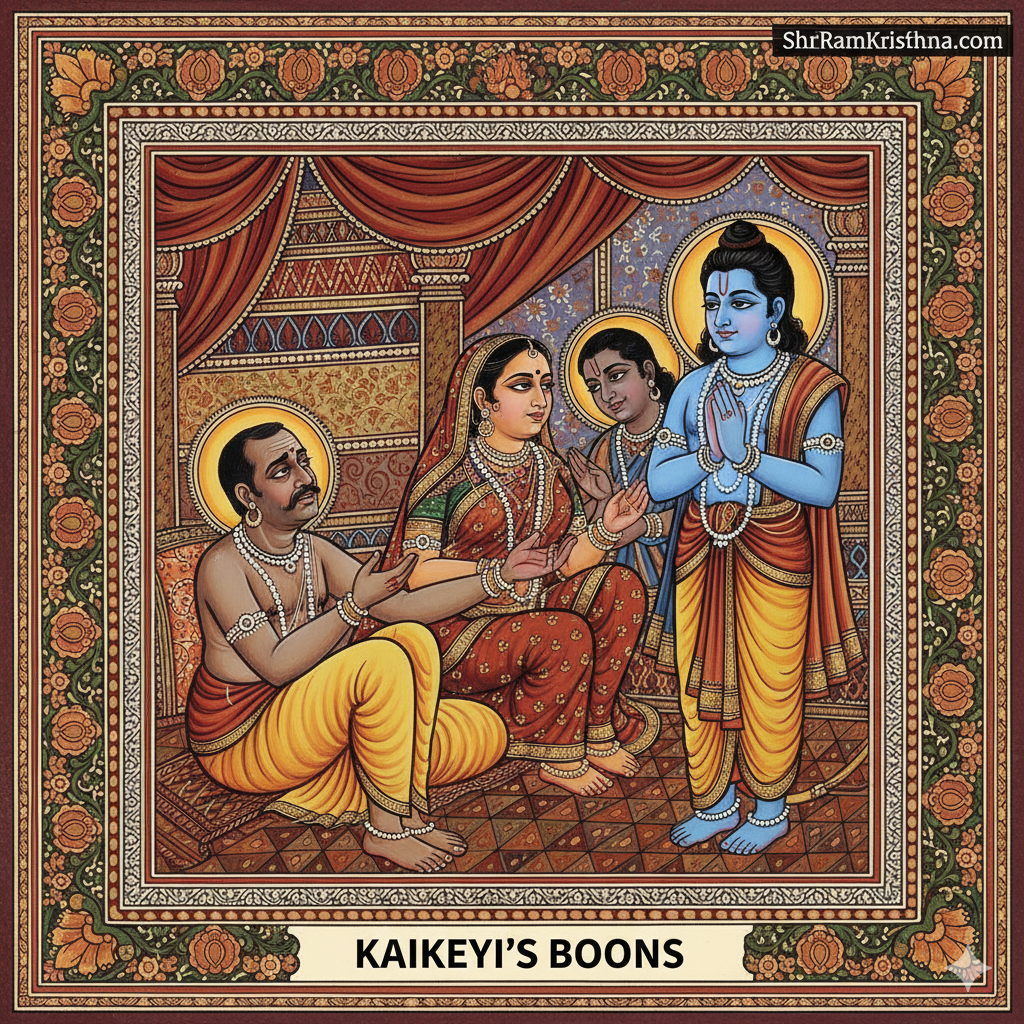
Kaikeyi’s tone was firm, devoid of compassion. Dasharath’s suffering did not sway her resolve. For her, the boons had transformed from promises into entitlement. This moment reveals how attachment, when overpowering wisdom, can reduce relationships to cold formalities.
वचन की अटलता और राजा का धर्म
दशरथ जानते थे कि यदि वे अपना वचन तोड़ते हैं, तो राज्य की नैतिक नींव हिल जाएगी। राजा का वचन केवल व्यक्तिगत नहीं होता—वह प्रजा के विश्वास का आधार होता है। इसी बोध ने उन्हें भीतर से और भी तोड़ दिया।
Dasharath knew that breaking his word would shake the moral foundation of the kingdom. A king’s promise is not personal—it underpins public trust. This realization deepened his inner collapse.
निर्णय का मौन स्वीकार
अंततः दशरथ ने निर्णय को मौन रूप से स्वीकार कर लिया। यह स्वीकार शब्दों में नहीं था—यह उनके झुके हुए मस्तक और अश्रुपूरित नेत्रों में प्रकट हुआ। यह क्षण सत्ता के नहीं, मानवीय दुर्बलता के इतिहास में दर्ज हुआ।
Ultimately, Dasharath accepted the decision in silence. This acceptance was not spoken—it was visible in his bowed head and tear-filled eyes. The moment entered history not as an act of power, but of human frailty.
राम तक समाचार का पहुँचना
दशरथ के आदेश के अनुसार दूत राम तक पहुँचे। राम उस समय राजमहल में थे, राज्याभिषेक की तैयारियों से अनभिज्ञ। जैसे ही उन्हें बुलाया गया, उन्होंने सहज भाव से पिता की आज्ञा का पालन किया।
Messengers reached Ram as per Dasharath’s order. Ram was in the palace, unaware of the impending upheaval. When summoned, he followed his father’s call with natural obedience.
दशरथ–राम संवाद की पीड़ा
जब राम दशरथ के समक्ष पहुँचे, दशरथ बोल नहीं पाए। उनके नेत्रों से अश्रु बहने लगे। यह संवाद शब्दों का नहीं, पीड़ा का था। राम ने पिता की स्थिति देखकर समझ लिया कि कोई असाधारण निर्णय लिया जा चुका है।
When Ram stood before Dasharath, the king could not speak. Tears streamed down his face. This was not a conversation of words, but of pain. Seeing his father’s condition, Ram understood that an extraordinary decision had been made.
कैकेयी का निर्णय राम के समक्ष
कैकेयी ने स्वयं राम को दोनों वरदानों की सूचना दी। उन्होंने बिना किसी संकोच के कहा कि राम को चौदह वर्षों के लिए वन जाना होगा। यह वाक्य राम के लिए अप्रत्याशित था, पर अस्वीकार्य नहीं।
Kaikeyi herself informed Ram of the two boons. Without hesitation, she stated that Ram must go to the forest for fourteen years. The statement was unexpected for Ram—but not unacceptable.
राम की प्रतिक्रिया: धर्म का साक्षात रूप
राम के मुख पर न क्रोध था, न शोक। उन्होंने शांत भाव से निर्णय को स्वीकार किया। उनके लिए पिता का वचन सर्वोपरि था। यह क्षण दर्शाता है कि धर्म केवल उपदेश नहीं, व्यवहार में उतरी हुई चेतना है।
Ram’s face showed neither anger nor sorrow. He accepted the decision calmly. For him, his father’s word was supreme. This moment demonstrates that dharma is not mere preaching—it is consciousness lived through action.
सीता और लक्ष्मण के लिए संकेत
राम ने तुरंत सीता और लक्ष्मण को इस निर्णय का संकेत दिया। उनके स्वर में कोई भय नहीं था—केवल स्पष्टता थी। यह स्पष्टता आगे आने वाले त्याग की भूमिका थी।
Ram promptly conveyed the decision to Sita and Lakshman. There was no fear in his voice—only clarity. This clarity set the stage for the sacrifices to follow.
अध्याय का गहन भावात्मक स्वर
यह अध्याय आनंद से शोक की ओर यात्रा है। यह दर्शाता है कि जीवन में धर्म का मार्ग सरल नहीं होता। सबसे प्रिय क्षणों के बाद ही सबसे कठिन परीक्षाएँ आती हैं।
This chapter is a journey from joy to sorrow. It shows that the path of dharma is never easy. The hardest tests often follow the most cherished moments.
राम का औपचारिक वनवास स्वीकार
कैकेयी के निर्णय को सुनने के पश्चात श्रीराम ने उसे केवल स्वीकार ही नहीं किया, बल्कि उसे धर्म का आदेश मान लिया। उन्होंने कहा कि पिता का वचन ही उनका धर्म है और उसी में उनका कर्तव्य निहित है। वनवास उनके लिए दंड नहीं, सेवा का एक और मार्ग था। इस क्षण में राम ने यह स्पष्ट कर दिया कि धर्म परिस्थिति से नहीं, आचरण से परिभाषित होता है।
After hearing Kaikeyi’s decree, Ram did not merely accept it—he embraced it as dharma’s command. He declared that a father’s promise was his supreme duty. For him, exile was not punishment, but another path of service. In this moment, Ram clarified that dharma is defined not by circumstance, but by conduct.
सीता का अडिग संकल्प
जब सीता को राम के वनवास का समाचार मिला, उन्होंने बिना किसी विलंब के उनके साथ जाने का निर्णय लिया। उन्होंने स्पष्ट कहा कि जहाँ पति का धर्म है, वहीं पत्नी का भी धर्म है। उनके लिए वनवास भय का नहीं, सहचर्य का प्रतीक था।
When Sita learned of Ram’s exile, she immediately chose to accompany him. She stated firmly that where a husband’s dharma lies, so does the wife’s. For her, exile was not a source of fear, but a symbol of companionship.
लक्ष्मण की भ्रातृ निष्ठा
लक्ष्मण ने भी राम के साथ जाने का संकल्प लिया। उनके लिए यह निर्णय कोई विचार-विमर्श का विषय नहीं था। बड़े भ्राता के साथ रहना ही उनका जीवन धर्म था। उनका क्रोध नहीं, समर्पण प्रकट हुआ।
Lakshman too resolved to accompany Ram. For him, this was not a matter for deliberation. Serving his elder brother was his life’s dharma. His response reflected devotion, not anger.
दशरथ का मानसिक पतन
राम का यह शांत और दृढ़ निर्णय दशरथ के लिए असहनीय हो गया। उन्होंने स्वयं को अपराधी माना। पुत्र की मर्यादा ने पिता के हृदय को और अधिक पीड़ा दी। यह वह क्षण था जहाँ राजा भीतर से टूट गया।
Ram’s calm and resolute acceptance became unbearable for Dasharath. He saw himself as guilty. The son’s righteousness intensified the father’s pain. This was the moment when the king collapsed inwardly.
कैकेयी का मौन और आत्मबोध की शुरुआत
इस पूरे घटनाक्रम के बाद कैकेयी मौन हो गईं। यद्यपि उन्होंने अपने वरदान प्राप्त कर लिए थे, पर राम के आचरण ने उनके भीतर एक गहरा प्रश्न खड़ा कर दिया। यह आत्मबोध अभी स्पष्ट नहीं था, पर बीज पड़ चुका था।
After the unfolding events, Kaikeyi fell silent. Though she had secured her boons, Ram’s conduct planted a deep question within her. The realization was not yet clear—but its seed had been sown.
अयोध्या पर शोक की छाया
जैसे ही वनवास का समाचार नगर में फैला, अयोध्या शोक में डूब गई। वही नगरी जो कुछ समय पहले आनंद से गूँज रही थी, अब मौन और पीड़ा से भर गई। यह सामूहिक दुःख धर्म की कीमत को दर्शाता है।
As news of the exile spread, Ayodhya was engulfed in sorrow. The city that had recently echoed with joy now sank into silence and grief. This collective sorrow revealed the cost of dharma.
धर्म की कठोर परीक्षा
यह अध्याय स्पष्ट करता है कि धर्म का मार्ग भावनाओं के विरुद्ध भी जा सकता है। यहाँ हर पात्र सही होते हुए भी पीड़ित है। यही धर्म की कठोरता और उसकी महानता दोनों हैं।
This chapter makes it clear that the path of dharma can oppose emotions. Every character here is righteous—yet suffering. This duality defines both the harshness and greatness of dharma.
अयोध्या काण्ड की निर्णायक दिशा
कैकेयी के वरदानों के साथ अयोध्या काण्ड एक नए चरण में प्रवेश करता है। अब कथा केवल राजमहल की नहीं, वन, त्याग और तप की यात्रा बनने जा रही है। यह अध्याय उस परिवर्तन का द्वार है।
With Kaikeyi’s boons, Ayodhya Kand enters a new phase. The narrative now shifts from palace halls to forests, sacrifice, and austerity. This chapter stands as the gateway to that transformation.
अध्याय का अंतिम आध्यात्मिक निष्कर्ष
कैकेयी के वरदान यह सिखाते हैं कि धर्म कभी-कभी सबसे प्रिय सुखों का त्याग माँगता है। पर जो इस त्याग को शांत चित्त से स्वीकार करता है, वही इतिहास में आदर्श बनता है। श्रीराम का वनवास इसी आदर्श की स्थापना है।
Kaikeyi Boons teach that dharma sometimes demands the sacrifice of one’s most cherished joys. Yet those who accept this sacrifice with equanimity become eternal ideals. Ram’s exile establishes this very ideal.
जय श्री राम
Jai Shri Ram